
Editorial
The Bengal Fan - Geomorphology and Sediment Distribution
DOI:
https://doi.org/10.51710/jias.v43iI.474Abstract
The Bay of Bengal is a large but relatively shallow embayment of the northeastern Indian Ocean. It receives a significant amount of freshwater and sediment, approximately 2000 million tonnes annually, from the Himalayan and the Indian peninsular rivers during the North East (NE) and the South West (SW) monsoons, respectively. The sediment flux to the bay is among the highest globally due to its size, location, and the catastrophic deposition of sediments. Long paleo-synoptic reconstructions and paleomonsoon interpretations from sediment cores in the Bay of Bengal are limited. This is largely because the enormous sediment load that enters the Bay through river discharge occurs under high-energy conditions, making it challenging to retrieve turbidity-free and undisturbed sediment cores. However, some recent reports (Ponton et al., 2012; Tripathy et al., 2014) have documented variations in paleoclimate and geochemical cycles from the Last Glacial Maximum to the late Holocene period in the Bay of Bengal. Sedimentological and geochronological studies conducted on the eastern Bengal shelf studied by Kuehl et al. (1989) revealed that the highest sediment accumulation from the Ganges-Brahmaputra river system occurs near the head of the Swatch of No Ground, which is located west of the present river mouths of Ganges-Brahmaputra. Additionally, Kolla and Rao (1990) analyzed sediment sources from the Bay of Bengal and reported high quartz and low calcium carbonate percentages adjacent to the Indian subcontinent, likely due to a substantial influx of terrigenous clastics. Furthermore, investigations on the mineralogy and heavy minerals in sands suggest that sediments of the western Bengal Fan, characterized by high levels of smectite, sillimanite, and garnet, are derived from peninsular Indian rivers.
Downloads
Author Biography
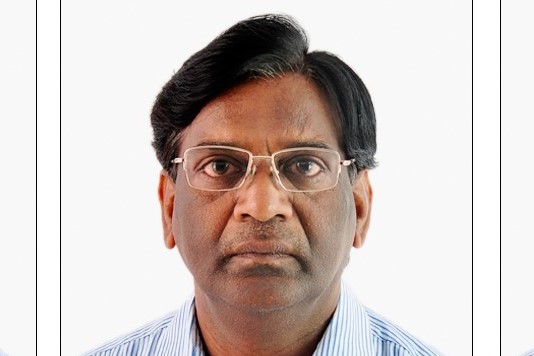
Ganapati Narayan Nayak, Goa University
References
Bejugam, P. and Nayak, G.N. (2016a), Changing depositional environment revealed from sediment components, west of “Swatch of No Ground”, northern Bay of Bengal; Arabian Journal of Geosciences, v. 9(9), p. 551–563. doi:10.1007/s12517-016-2563-y
Bejugam, P. and Nayak, G.N. (2016b), Source and depositional processes of the surface sediments and their implications on productivity in recent past off Mahanadi to Pennar River mouths, western Bay of Bengal; Palaeogeography, Palaeoclimatology, Paleoecology, v. 483, p. 58–69. doi: 10.1016/j.palaeo.2016.12.006
Bejugam, P. and Nayak, G.N. (2019b), Source of sediments and response of clay minerals, organic matter and metals to fluctuating environmental conditions in western Bay of Bengal; Indian Journal of Geo-Marine Science, v. 48(04), p. 535–553.
Bejugam, P. and Nayak, G.N. (2019a), Tracing source–sink processes and productivity from trace metals (Ba, Zn, Pb, Cd) of the surface sediments off Mahanadi to Pennar, western Bay of Bengal; Environmental Earth Science, v. 78, p. 107 doi.org/10.1007/s12665-019-8070-1
Blum, M., Rogers, K., Gleason, J., Najman, Y., Cruz J. Fox, L. (2018). Allogenic and Autogenic Signals in the Stratigraphic Record of the Deep-Sea Bengal Fan; Science Reporter, v. 8, p.7973. doi.org/10.1038/s41598-018-25819-5
Bouma, A.H., Stelting, C.E., Coleman, J.M. (1985). Mississippi Fan: Internal structure and depositional processes; Geo-Marine Letters, v. 3, p. 147-153.
Bouquillon, A., Chamley, H., Frohlich, E. (1989). Sedimentation argileuse au Cenozoique superieurdans l'Ocean Indien nord-oriental; Oceanologica Acta, v.12, p. 133-147.
Chauhan, O. S., Rajawat, A. S., Pradhan, Y., Suneethi, J., Nayak, S. R. (2005). Weekly observations on dispersal and sink pathways of the terrigenous flux of the Ganga–Brahmaputra in the Bay of Bengal during NE monsoon; Deep Sea Research Part II: Topical Studies in Oceanography, v. 52(14–15), p. 2018–2030. doi.org/10.1016/j.dsr2.2005.05.012
Crowley, S. F., Stov, D. A. V., Croudace, I. W. (1998). Mineralogy and geochemistry of Bay of Bengal deep-sea fan sediments, ODP Leg 116: evidence for an Indian subcontinent contribution to distal fan sedimentation; Geological Society, London, Special Publications 131(1) p. 151–76. dx.doi.org/10.1144/gsl.sp.1998.131.01.11
Curray, J. R. and Moore, D. G. (1971), Growth of the Bengal deepsea fan and denudation of the Himalayas; Geological Society of American Bulletin, v. 82, p. 563-572.
Curray, J. R., Emmel, F. J., Moore, D. G. (2003). The Bengal Fan: Morphology, geometry, stratigraphy, history and processes; Marine and Petroleum Geology, v. 19(10), p. 1191–1223. doi.org/10.1016/S0264?8172(03)00035?7
Dietz, R.S. (1983). Possible deep-sea turbidity-current channels in the Indian ocean;Bulletin of Geological Society of America, v. 64, p. 375-378.
Emmel, F.J. and Curray, J.R. (1983), The Bengal Submarine Fan, Northeastern Indian Ocean; Geo-Marine Letters, v. 3, p. 119–124. doi.org/10.1007/BF02462456
Einsele, G., Ratschbacher, L., Wetzel, A. (1996). The Himalaya –Bengal Fan denudation – accumulation system during the past 20 Ma.; Journal of Geology, v. 104, p. 163–184.
France-Lanord, C., Derry, L., Michard, A. (1993). Evolution of the Himalaya since Miocene time: isotopic and sedimentological evidence from the Bengal Fan; Geological Society, London, Special Publications 74(1), p.603-621.
Goldberg, E. D. and Griffin, J. J. (1970), The sediments of the northern Indian Ocean; Deep Sea Research, v. 17, p. 513-537.
Gong, C., Wang, H., Shao, D., Wang, H., Qi, K., Xu, X. (2022). How did the world’s largest submarine fan in the Bay of Bengal grow and evolve at the subfan scale?; AAPG Bulletin v. 106 (7), p. 1431–1451. doi.org/10.1306/02072219107
Kangane, J., Nayak, G.N., Choudhary, S. (2019). Source and processes from core sediment samples off Mahanadi and Krishna rivers, western Bay of Bengal; Jounal of the Indian Association of Sedimentologists, v. 36(1), p.65-83
Kangane, J., Nayak, G.N., Tiwari, A.K., Nasnodkar, M.R. (2021). Physical/chemical weathering and climate fluctuations during last ~6000 years—investigation through a sediment core, off Mahanadi River mouth, western Bay of Bengal; Arabian Journal of Geosciences, v. 14 p. 1563. doi.org/10.1007/s12517-021-08044-9
Kangane, J., Nayak, G.N., Tiwari, A.K., Saalim, S.M. (2021b). Changing the paleo?depositional environment in the last 2300 years: a study through sedimentology and geochemistry of a sediment core, western Bay of Bengal; Environmental Earth Sciences, v. 80, p. 4. doi.org/10.1007/s12665-020-09321-8
Kolla, V. and Biscaye, P. (1973), Clay mineralogy and sedimentation in the eastern Indian Ocean; Deep Sea Research, v. 20, p. 727-738.
Kolla, V. and Rao, N.M. (1990), Sedimentary sources in the surface and near-surface sediments of the Bay of Bengal; Geo-Marine Letters, v. 10(3), p.129-135.
Kolla, V., Bandyopadhyay, A., Gupta, P., Mukherjee, B., Ramana, D.V. (2012). Morphology and Internal Structure of a Recent Upper Bengal Fan-Valley, Complex Available to Purchase. Book Chapter. doi.org/10.2110/pec.12.99.0347
Kuehl, S.A., Hariu, T.M., Moore, W.S. (1989). Shelf sedimentation off the Ganges-Brahmaputra River system: Evidence for sediment bypassing to the Bengal fan; Geology, v. 17(12), p.1132-1135.
Li, J., Liu, S., Feng, X., Sun, X., Shi, X. (2017). Major and trace element geochemistry of the mid?Bay of Bengal surface sediments: Implications for provenance. Acta Oceanologica Sinica, v. 36(3), p. 82–90. doi.org/10.1007/s13131?017?1041?z
Liu, J., He, W., Cao, L., Zhu, Z., Xiang, R., Li, T., Li, T., Shi, X., Liu, S. (2019). Staged fine?grained sediment supply from the Himalayas to the Bengal Fan in response to climate change over the past 50,000 years. Quaternary Science Reviews, v. 212, p. 164–177. doi.org/10.1016/j.quascirev.2019.04.008
Nayak, G.N., Bejugam, P., Kangane, J. (2022). Reading source, Holocene climate change and monsoon signatures in surface and core sediments from western Bay of Bengal; In book: Holocene Climate Change and Environment, p 197-228. doi:10.1016/B978-0-323-90085-0.00020-6
Normark, W.R. (1970), Growth patterns of deep-sea fans; American Association of Petroleum Geologists Bulletin, v. 54 (1970), p. 2170-2195
Normark, W.R., Posamentier, H., Mutti, E. (1993). Turbidite systems: State of the art and future directions. Reviews of Geophysics, v. 31, p. 91-116.
Piper, D.J.W. and Normark, W.R. (2001), Sandy fans-from Amazon to Hueneme and beyond; American Association of Petroleum Geologists Bulletin, v. 85, p.1407-1438.
Ponton, C., Giosan, L., Eglinton, T.I., Fuller, D.Q., Johnson, J.E., Kumar, P., Collett, T.S. (2012). Holocene aridification of India; Geophysical Research Letters, v. 39(3), p.1-6.
Schwenk, T. and Spiess, V. (2009), Architecture and Stratigraphy of the Bengal Fan as Response to Tectonic and Climate Revealed from High-Resolution Seismic Data; In book: External Controls on Deep-Water Depositional Systems, Ed. 92, Publ: SEPM, Editors: Kneller, Martinsen, McCaffrey, doi:10.2110/sepmsp.092.107
Shanmugam, G. (2016). Submarine fans: A critical retrospective (1950-2015); Journal of Palaeogeography, v. 5(2), p. 110-184.
Shanmugam, G. and Moiola, R.J. (1988), Submarine fans: Characteristics, models, classification, and reservoir potential; Earth-Science Reviews, v. 24, p. 383-428.
Sun, X., Liu, S., Fang, X., Li, J., Cao, P., Zhao, G., Khokiattiwong, S., Kornkanitnan, N., Shi, X. (2020). Clay minerals of surface sediments from the lower Bengal Fan: Implications for provenance identification and transport processes; Geological Journal, v. 55(9), p. 6038–6048. doi.org/10.1002/gj.3786
Sun, X., Liu, S., Li, J., Zhang, H., Zhu, A., Cao, P., Chen, M., Zhao, G., Khokiattiwong, S.,?Kornkanitnan, N., Shi, X. (2019). Major and trace element compositions of surface sediments from the lower Bengal Fan: Implications for provenance discrimination and sedimentary environment; Journal of Asian Earth Sciences, v. 184, p. 104000. doi.org/10.1016/j.jseaes.2019.104000
Weber, M. E., Wiedicke, M. H., Kudrass, H., Erlenkeuser, H. (2003). Bengal Fan sediment transport activity and response to climate forcing inferred from sediment physical properties; Sedimentary Geology, v. 155(3–4), p. 361–381. doi.org/10.1016/S0037?0738(02)00187?2
Xue, P., Chang, L., Wang, S., Liu, S., Li, J., Shi, X., Khokiattiwong, S., Kornkanitnan, N. (2019). Magnetic mineral tracing of sediment provenance in the central Bengal Fan; Marine Geology, v. 415, p. 105955. doi.org/10.1016/j.margeo.2019.05.014
Downloads
Published
How to Cite
Issue
Section
License
Copyright (c) 2026 Journal of The Indian Association of Sedimentologists (peer reviewed)

This work is licensed under a Creative Commons Attribution-NonCommercial-ShareAlike 4.0 International License.
Copyright ©2026 by The Indian Association of SedimentologistsAll rights reserved. No part of this publication may be reproduced, distributed, or transmitted in any form or by any means, including photocopying, recording, or other electronic or mechanical methods, without the prior written permission of the publisher, except in the case of brief quotations embodied in critical reviews and certain other non-commercial uses permitted by copyright law. Click the link below to download the copyright transfer form and upload the signed form in the submission section.Copyright Transfer form
Managing Editor/sJournal of the Indian Association of Sedimentologists